Pin it

Showing posts with label euthanasia. Show all posts

Friday, October 18, 2013

Euthanasia: Why Not?

While the cultural battle rages most obviously around abortion, another threat to human dignity, euthanasia, has been in the background for decades. And while many will concede that the killing of an innocent child is morally questionable, they might disagree when it comes to euthanasia. After all, isn’t it more compassionate to allow someone to avoid the pain, embarrassment, and drawn-out suffering that old age so often brings? And aren’t those of us who want to force Grandma to live against her will somehow doing something inhumane? For Christians, it may be most natural to respond that only God may choose when we die and that people have dignity at every age, but with the average secular American, this tactic won’t work.


Fortunately, there are intelligent ways to argue against euthanasia without resorting to religious beliefs, and the easiest way to learn them is to divide the arguments into two categories: autonomy and quality of life.
The basic premise of the autonomy argument is that people should have the right to decide when they want to die. Proponents of euthanasia want laws allowing the elderly and terminally ill to have this option, but it’s impossible to limit this “right” to only certain people. What if an eighteen year old has been dumped by her boyfriend and decides that life is no longer worth living? Most people would agree that this is no reason to allow her to kill herself, but a law preventing such cases could be challenged on the basis of discrimination. In the Netherlands, for example, euthanasia was once limited to the terminally ill; today, children as young as twelve may legally seek assisted suicide, and doctors have more power over their patients’ lives than ever before.
Another way to address autonomy is to explain how those seeking suicide are never truly autonomous. Two separate studies, one conducted in Missouri and the other in Great Britain, found that of those considering suicide, 93% suffered from a mental disorder that impaired rational decision making. Another study discovered that of the terminally ill, 24% expressed a desire for assisted suicide, but of that 24%, every single patient had a mental disorder. In other words, in the overwhelming majority of cases, depression or another mental disorder, not the illness itself, caused suicidal thoughts, and mental illnesses are treated separately. Remember, too, that it’s terrible to assume that because someone is terminally ill, they should want to die. Most people who receive a terminal diagnosis are sad because they want to continue living.
This brings us to the quality of life arguments. These are harder to argue because they are much more personal; people are concerned about living in pain, facing a life of disability, or being a burden upon a loved one. What most people don’t realize is that we have the ability to control pain in up to 99% of cases. Too often, however, doctors and nurses do not receive adequate education in pain management, leaving them helpless or unsure of themselves when their patients are suffering. Instead of focusing on euthanasia, we should work for greater education in pain management so that healthcare providers at a clinical level can use it. After all, killing someone in pain does not solve the problem of pain, and we shouldn’t solve problems by killing people.
Also within the quality of life category is the disability argument; in our culture, it is far too commonly assumed that because someone has a disability, that person’s life is not worth living. Besides being incredibly discriminatory, this is just wrong, and certainly not compassionate or respectful. Allowing a disability exception within euthanasia laws just says that anyone who doesn’t meet our standards is disposable. A better response is to work as a society to be more accommodating; for example, we already require new buildings to be handicap accessible, indicating that we value people in wheelchairs despite their inability to walk. Many people with disabilities will tell you that they only feel different when other people treat them that way. Somehow, I suspect that being told they qualify for assisted suicide isn’t what they have in mind when it comes to equality.
Finally, people are frequently concerned about dying alone or being a burden on their loved ones. However, telling the elderly that we will be “compassionate” and allow them to die is actually confirming their fears of being burdensome and unlovable. Instead, telling Grandma that we will care for her and love her no matter what is much more reassuring; it says that we value her as an individual, and not because she’s “useful” or self-sufficient. Caring for others and allowing ourselves to be cared for is part of the human experience, and no one could survive long without other people there to help them.
Many proponents of euthanasia may never have heard persuasive, rational arguments against it, so hearing the subject presented in this way might be the key to more fruitful discussion. For anyone seeking more information or interested in learning where these studies come from, National Right to Life has an excellent series of articles on euthanasia (found here), as well as other issues of medical ethics.

 (A version of this article was first published on Ignitum Today)

Wednesday, August 7, 2013

Tales from Camp Joshua, Part Three

[This is the third installment of our Camp Joshua 2013 series. Click here for Part 1 and here for Part 2.]


Dr. Mistrot's presentation
Saturday night, we welcomed Dr. Jacques Mistrot, a retired surgeon, to speak about stem cell research. While many of us hear about stem cell research in the news, most people don't know much about it, so his talk was one of our favorites. Dr. Mistrot, who has devoted much of his retirement to speaking on bioethics, told us how stem cells can be broken into two main categories, adult and embryonic. Adult stem cells are taken from sources such as bone marrow or umbilical cord blood, and they have been used to treat over 70 diseases to date. Embryonic stem cells, on the other hand, are taken from living embryos, destroying those lives in the process. Not only does it take many thousands of embryos to conduct research, but no illnesses have been successfully treated using embryonic stem cells. This, he explained, is why adult stem cell research is better from both a scientific and ethical standpoint, because it has effectively treated all kinds of diseases without destroying embryonic human lives. 


The students enjoying a bit of free time together.
Saturday was such a busy day that everyone was ready for a relaxing evening. The teens grabbed their blankets and pillows, threw on comfortable clothes, and settled down for a movie night complete with popcorn and candy. We watched October Baby, a powerful pro-life film following the journey of Hannah, a young woman who learns she was born after a failed abortion. Because Hannah hadn't even known she was adopted, she struggles to reconcile the life she thought she knew with the one she now has. It's a great movie...even when, despite your best efforts, your DVD player and projector inexplicably show it in black and white with Spanish subtitles! 

The next morning we were up bright and early for the optional church services and breakfast. Afterwards, Sarah Zagorski (Louisiana Right to Life) motivated everyone with her "Pro-Life Activism" presentation. Since the earlier sessions focused on learning the facts and rhetorical tools for effective pro-life persuasion, this one was all about actively using those skills. Our goal is that these students will return to their families, schools, churches, and communities and share what they have learned! 

The next few hours were occupied with lunch, evaluations, and packing. We couldn't believe how quickly the time had gone! It wasn't quite time to go home yet, though. In the afternoon, Dr. Melinda Snyder spoke about euthanasia and how it is a growing problem in the United States. For some vulnerable elderly or disabled adults, basic food and water is often considered extraordinary care, meaning they will die slow, painful deaths by starvation. She pointed out that even though it's a lot easier to defend the rights of a cute little baby, we'll all be elderly someday and in need of just as much love, care, and protection. The teens seemed interested in what she had to say; like stem cell research, the facts about euthanasia and end of life issues aren't as well known or understood. 

Camp Joshua NC officially ended with a small closing ceremony. We told the students how impressed we had all been with their attention, respect, and attitude, and also how glad we were that they had come! We reminded them of their responsibility to use what they had learned, to talk to their friends and family, and to share the pro-life message in whatever way they could. We also told them that the relationships they had formed while at Camp Joshua are absolutely priceless, and to rely on each other in times of discouragement. Finally, we called each student up and gave him or her a certificate of completion. We are so proud of them!

After our closing ceremony

Our first experience with Camp Joshua was so wonderful! We are grateful to all the people who helped make it happen, especially the adult volunteers and, most of all, the teens who sacrificed a weekend of their summer to come. They were an ideal group to work with, and we can't wait to do this again next year!

If you or someone you know might be interested in Camp Joshua, please, tell them about it! We can always use volunteers to help promote our camp, not to mention teens to attend! We will be posting updates as to our progress on our website, our camp website, Facebook, Twitter (@ncrtl), Pinterest, and this blog. Check back often for more details about next year's camp! 

Monday, December 27, 2010

Pro-Life Events in Raleigh on January 15

North Carolina Right to Life, Inc. will host the 12th Annual Prayer Breakfast for Life on January 15, 2011, at the Holiday Inn Brownstone Hotel and Conference Center, 1707 Hillsborough Street, Raleigh, NC.

(Breakfast begins at 9:30 a.m. - Program 10:00 a.m.)

The cost for the breakfast is $25/person, $40/married couple, $20/students, clergy, and seniors. Payment can be made using MC/VISA/DISCOVER/Check. Call 1-800-392-6275 to register by phone using MC, VISA or Discover. Mail check or money order to NCRTL Events, PO Box 9282, Greensboro, N. C. 27429-0282.

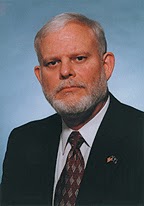
WAYNE COCKFIELD

Wayne Cockfield, USMC Retired, Florence, South Carolina, serves on the board of the National Right to Life Committee and works with South Carolina Citizens for Life, a state affiliate of the National Right to Life Committee.  He helped to successfully lobby the U.S. Congress for passage of the Assisted Suicide Funding Restriction Act of 1997, which prevents federal tax dollars from being used to fund the killing of American citizens. He also lobbied successfully for a Medicare bill to ensure that Americans would not be prohibited from using their own money to obtain non-rationed health care and would not be denied medical treatment based on their quality of life.

A Vietnam War veteran, Cockfield stepped on a land mine in 1969 while on river patrol in Quang Nam Province. As a result, he lost both legs, much of the use of his right hand, and suffered numerous internal injuries.

"People with disabilities are often mistakenly considered by others to have a 'poor quality of life,'" Cockfield says. "Assisted suicide is spoken about by people with no serious disabilities. Disabled people do not want to die." Wayne will be the featured speaker at both events.


Reverend Jarrod Scott


Reverend Jarrod Scott, Senior Pastor of Green Pines Baptist Church in Knightdale, will give the Invocation and a reflection.


Alyse 2009.
(Photo-Kim Lancaster)
Alyse Player


Alyse Player, www.alyseplayer.com, will be the featured vocalist at both events. Since age 5, Alyse has been singing at many events, competitions, church services and festivals. She has won several local talent competitions, and has received a Top Vocalist Award with a National Competition Company. She was so well received at our events in 2010 that we asked her to be at our events in 2011.


The 2011 Annual Rally and March for Life will immediately follow the Prayer Breakfast at 1:00 p.m. at Nash Square, the corner of Hargett and McDowell Streets in downtown Raleigh, NC. All pro-lifers from across the state are invited to stand up for life and to display proudly your church or school banner in support of life. Our newly elected members of the General Assembly will be in Raleigh that day and will be taking note of our gathering. Come to represent your community as a voice for the voiceless.


The Most Reverend Michael F. Burbidge
 

Reverend Brent Tysinger


Speakers: The Most Reverend Michael F. Burbidge, Bishop of the Diocese of Raleigh, will give remarks and the Invocation. Reverend Brent C. Tysinger, Pastor of Mt. Pleasant Community Church in Asheboro, will give the Benediction.

Greetings from pro-life elected officials will be read. Information about North Carolina Right to Life's #1 legislative priority will be explained. A challenge will be issued to all pro-lifers to lobby their newly elected members of the NC General Assembly to pass an Abortion-Woman's Right to Know law which is estimated to save every year thousands of North Carolina's unborn children from abortion.

The NC Knights of Columbus Color Guard will present the colors at the Rally and lead the March.  The March for Life will end at Sacred Heart Cathedral with refreshments and an opportunity to get pro-life materials such as pamphlets, precious feet pins, bumper stickers, magnets, etc.  Alyse Player will have her CDs for sale.

For More Information, call: NCRTL at 1-800-392-6275.


Tuesday, September 14, 2010

Assisted Suicide Advocate and Practitioner to Bring His Deadly Business to North Carolina

The Rev. George Exoo, a self-described advocate for assisted suicide, has purchased property in Gastonia, NC where he hopes to assist individuals in killing themselves.  He claims to have helped already more than 100 people to commit suicide, as well as talk people through the process over the phone.  Because North Carolina does not have a law that specifically bans assisted suicide, he views our state and Gastonia, in particular, as an ideal place to assist persons who want to kill themselves.  As he explained to the Charlotte Observer reporter and News 14 Carolina, Gastonia is near the Charlotte International Airport and is close to states like Mississippi, Georgia, Florida, and New York which would allow people easy access to his so-called "right to die" hospice.

North Carolina Right to Life (NCRTL) advocated for a bill several years ago that would have banned assisted suicide in NC.  State Senator James Forrester, a physician, introduced the legislation.  Unfortunately, the chairman of the committee where the bill was referred, had the ear of the Hospice and Palliative Care of the Carolinas that forcefully lobbied against the bill so the bill never got a hearing.  The argument by the Hospice organization was two fold.  First, it was said they thought that the bill would have a chilling effect on doctors' use of morphine to treat pain.  Second, it was argued that NC did not have a problem with people helping others kill themselves, assisted suicide.


Morphine is a controlled substance; therefore, it is easy to get records showing the rise and fall in usage of the drug in every state.  Fortunately for us, there was a study done that showed a direct correlation between the rise in the use of morphine and the strengthening of the laws banning assisted suicide.  Hospice's first argument was easily refuted by the study.  Still, the opponents of the bill would not budge.

Next, NCRTL learned that a documentary called Live and Let Go, An American Death was filmed in NC by a son and daughter showing their father committing suicide with their assistance.  The purpose of the documentary was to make assisted suicide more acceptable.  The documentary won an Asheville Film Festival award and the producers were interviewed on public radio with this writer providing the "right to life" position that those who wish to kill themselves need to receive treatment for depression and help with pain management, not help in killing themselves.

Today, there are reports in the Charlotte Observer and News 14 of the Carolinas that George Exoo, known as "Reverend Death" from the documentary by that name, is planning to set up shop in NC in large part because our state legislature did not act swiftly to ban assisted suicide here.  He thinks it will take him a year to get his place ready for the killing to begin.

The state legislature must act in January 2011, when it reconvenes, to ban assisted suicide. If they do not act then, our state will later find itself fighting off a bill to legalize assisted suicide. Oregon and Washington states have already passed laws legalizing assisted suicide. The next logical step will be the state using our tax dollars to pay for assisted suicides rather than paying for expensive treatments to help cure a variety of illnesses.  This has already happened in Oregon.  If we are not diligent, our state could be next.

Source: http://charlotte.news14.com/content/local_news/charlotte/630337/assisted-suicide-activist-plans-gastonia--right-to-die--hospice